The Complete Hajj Packing List: What to Bring (and What You Can Buy There)
14 September 2026
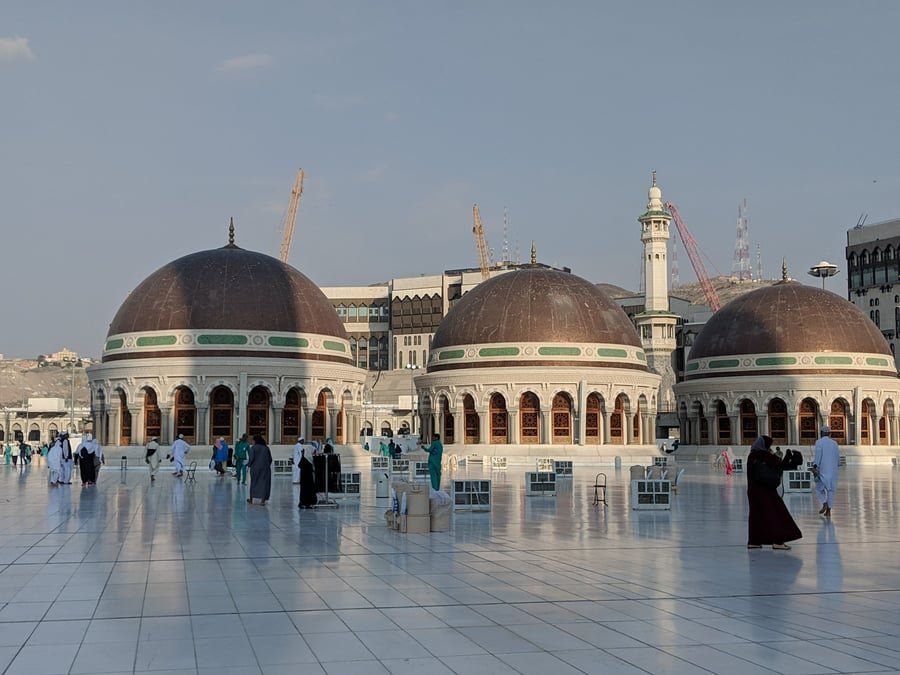
Packing for Hajj is different from packing for an ordinary trip — you're dressing for a physically demanding journey in serious heat, moving between hotel, tents, and open ground, often carrying what you need for an entire day at a time. None of this requires buying everything on a list before you leave home — plenty of it is easy to pick up in Makkah or Madinah once you're there, and it's worth packing light rather than over-preparing.
For the ihram itself: pack it in your carry-on if your journey starts in Makkah, since you'll need to be in ihram before you land — if you're routed through Madinah first, it can go in checked luggage instead. An ihram belt is worth having, since the garment has no pockets and a belt gives you somewhere to keep a phone or small items securely. Stick to fragrance-free soap, shaving cream, and deodorant while in ihram, and don't underestimate anti-chafing balm — applied generously to the groin and thigh area once or twice a day, it prevents one of the most common and genuinely miserable discomforts of long walking days in ihram. It's a small thing that makes a real difference.
On footwear: comfortable sandals, broken in for at least a week before you travel rather than worn for the first time on the trip. Since most pilgrims end up in near-identical sandals, marking yours with a strip of bright tape or a distinctive colour saves real frustration when hundreds of pairs are lined up outside a prayer hall.
For heat and hydration: a lightweight water bottle rather than a bulky insulated one you'll be carrying all day, a compact umbrella for shade, sunglasses, and some form of electrolyte or hydration sachets — plain water alone often isn't enough to stay properly hydrated in Saudi heat. A power bank and a compact plug adapter (Saudi Arabia uses UK-compatible Type G sockets) keep your phone charged and you contactable with your group, which matters more than it might sound like in a large crowd.
Marking your belongings clearly is worth doing before you travel, not after you lose something: bright tape or a distinctive luggage tag on your suitcase, backpack, and any bag you'll set down in a shared space makes it far easier to spot in a packed Mina camp, where bags tend to look identical. A small cross-body or drawstring bag for daily essentials — separate from your main luggage — is worth having for anything you need close at hand during the day.
The days in Mina (8th to around the 12th or 13th of Dhul Hijjah) call for a few days' worth of essentials: a spare set of ihram or a change of clothes, any regular medication, a dua book, basic toiletries, comfortable sandals, and some snacks, since meal times in camp don't always line up with when you're hungry. For Arafah and Muzdalifah specifically, you're away from your main luggage for roughly 24 hours, so pack light — a spare change of clothing, toiletries, your umbrella and sunglasses, hydration sachets, and a compact sleeping mat, since Muzdalifah accommodation is often little more than a carpet on open ground.
For day-to-day visits to the Haramain, a small bag with water, a snack, your money and cards, medication, a printed dua book, your phone and a charging cable, and a compact prayer mat (in case you end up praying outside the mosque itself in the overflow areas) covers most of what you'll actually reach for during the day. None of this needs to be perfect — if you forget something, it's very likely available nearby, and our group leaders are always happy to point you toward what's genuinely useful versus what's just nice to have.