One of the more common worries first-time pilgrims raise with us isn't about the rites themselves, but about the duas that go with them — which one, when, and whether getting the wording slightly wrong matters. It generally doesn't, and a sincere heart in your own words is always valid — but knowing the shape of it in advance takes the pressure off.
From the moment you enter ihram, the Talbiyah becomes your constant companion — recited repeatedly on the journey itself, right up until you begin Tawaf for Umrah, or until the stoning at Jamrat al-Aqabah on the 10th of Dhul Hijjah for Hajj. Before that, at the Meeqat, a simple niyyah (intention) in your heart is what formally begins your state of ihram — no fixed script is required for this part.
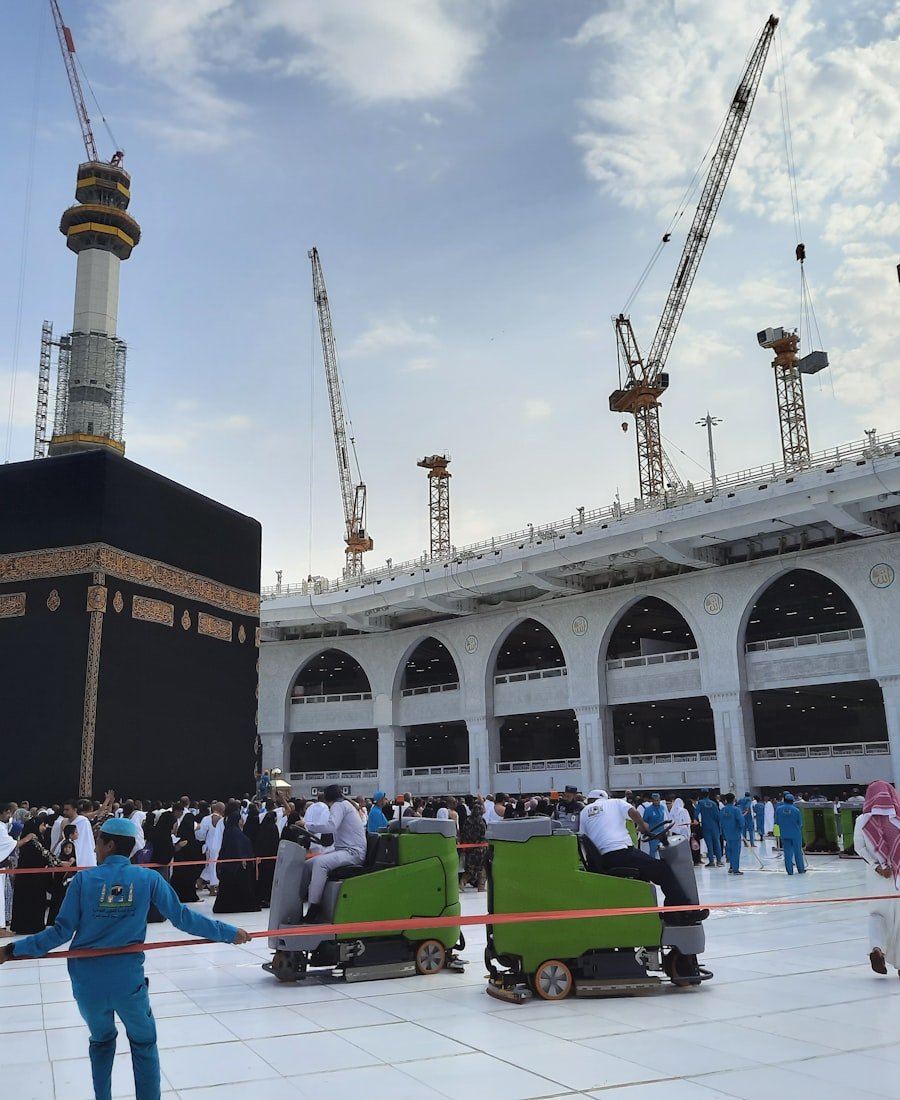
Once you're inside Masjid al-Haram, the general mosque-entering dua applies, and many pilgrims recite a dua of praise on their first sight of the Kaaba itself — a moment that tends to be far more emotional than people expect, even for those who've seen countless photos beforehand. During Tawaf, between the Yemeni Corner and the Black Stone on each of the seven circuits, the well-known verse "Rabbana atina fid-dunya hasanah..." is widely recited.
Sa'i has its own moment too — on ascending Safa to begin, before the walk to Marwah. And if your journey includes the Day of Arafah, that day carries what's reported as the best supplication made by the Prophet ﷺ and the prophets before him — worth knowing in advance, since Arafah is widely considered the spiritual peak of Hajj.
We've put the full Arabic text, phonetic transliteration, and English translation for each of these on our dedicated duas page — worth bookmarking or saving before you travel, so you're not searching for the right wording in the moment itself.